About Mark Chan

Mark Chan

()

Associate Professor
Biology, College of Science and Engineering

Phone Number:
(415) 405-2864
Location:

At SF State Since:

2015

Office Hours:

Bio:

I study how organelle size is sensed and controlled by the cell by using the budding yeast vacuole as a model system. The vacuole is a highly dynamic organelle which shows a size scaling relationship with the cell, i.e. larger cells have larger vacuoles. I am interested in how the cell maintains the vacuole at the appropriate size, and how this control impacts function.

Vacuole size control - One major goal is to determine whether there is feedback control of vacuole size. Does the cell sense the size of the vacuole? And can a cell with too large or small of a vacuole tune various pathways (e.g. membrane trafficking and inheritance) to get the vacuole back to the right size?

Functional consequences - Organelles often proliferate when demand for their function increases, and the vacuole is responsible for a number of degradative and homeostatic processes in the cell. How does the size of the vacuole affect its capacity or ability to carry out these functions? What effect does this have on overall cellular fitness or pathogenicity?

To answer these questions, we apply a number of techniques including live fluorescence microscopy; genetic, cell, and molecular biology; digital image analysis; and computational modeling.


Publications

Chadwick WL*, Biswas SK, Bianco S, Chan Y-HM. “Non-random localization of vacuoles in Schizosaccharomyces pombe.” Physical Biology (2020) 17: 065004.​ *Master’s student co-author

Bianco S, Chan, Y-HM, Marshall WF. “Towards computer-aided design of cellular structure.” Physical Biology (2020) 17: 023001.

Chan Y-HM, Reyes L*, Sohail SM*, Tran NK*, and Marshall WF. “Organelle Size Scaling of the Budding Yeast Vacuole by Relative Growth and Inheritance.” Current Biology (2016) 26, 1221–1228. *undergraduate student co-authors

Chan Y-HM. “Growth: A Model for Establishing Cell Size and Shape.” Current Biology (2016) 26, R756-R777.

Chan Y-HM, Marshall WF. “Organelle Size Scaling of the Budding Yeast Vacuole Is Tuned by Membrane Trafficking Rates.” Biophysical Journal (2014) 106: 1986-1996.1.    

Rafelski SM, Viana MP, Zhang Y, Chan Y-HM, Thorn KS, Yam P, Fung JC, Li H, Costa LdF, Marshall WF. “Mitochondrial Network Size Scaling in Budding Yeast is Achieved in the Bud at the Expense of the Mother.”Science (2012) 338: 822-824.

Chan Y-HM, Marshall WF. “How cells know the size of their organelles.” Science (2012) 337:1186-1189.

Chan Y-HM, Marshall WF. "Threshold-free method for three-dimensional segmentation of organelles." Proc.SPIE (2012) 8225: 822529.

Chan, Y-HM, Marshall WF. “Scaling properties of cell and organelle size.” Organogenesis (2010) 6:88-96.


Website(s):


CV:

Chan CV.pdf152.39 KB
About Nga N Ho-Dac

Nga N Ho Dac

()

Associate Professor
Marketing, College of Business

Phone Number:
(415) 405-2183
Location:

At SF State Since:

2014

Office Hours:

About Kevin Allen Simonin

Kevin Allen Simonin

()

Associate Professor
Biology, College of Science and Engineering

Phone Number:
(415) 338-1695
Location:
HH 438

At SF State Since:

2014

Office Hours:

Bio:

Research in the Simonin lab embraces the idea that understanding plant physiological controls over carbon, water and nutrient transport between soils, plants and the atmosphere are of critical importance for understanding how natural and human reconfigured ecosystems respond to a changing climate.  A general theme in the lab is the use of biophysical models that describe the coordination between plant water loss and carbon gain in order to assess the impact of atmospheric CO2 concentrations, temperature, water and nutrient availability, on plant productivity and ecosystem hydrology. 


Website(s):

Jonathan Hx Lee Headshot

Jonathan Lee

()

Instructional Faculty, Special Programs
Asian-American Studies, College of Ethnic Studies

Email:
Phone Number:
(415) 338-2279
Location:
EP 124

At SF State Since:

2009

Office Hours:

Bio:

Jonathan Lee specializes in Southeast Asian and Sino-Southeast Asian American studies at San Francisco State University. He received his PhD in Religious Studies from the University of California at Santa Barbara in 2009. He is the Program Co-chair of the Asian American religious studies sections for the American Academy of Religion, Western Region (AAR/WR) conference. His work has been published in Peace Review: A Journal of Social Justice; Nidan: International Journal for the Study of Hinduism; Chinese America: History and Perspectives; Empty Vessel: The Journal of the Daoist Arts; Asia Pacific Perspectives; JATI: Journal of Southeast Asian Studies; Journal of International Association of Buddhist Universities; Südostasien [Southeast Asia]; Amerasia Journal, and other journals and anthologies, both nationally and internationally. He is the editor of Cambodian American Experiences: Histories, Communities, Cultures, and Identities (2010); and co-editor with Kathleen M. Nadeau of the Encyclopedia of Asian American Folklore and Folklife (2011) and Asian American Identities and Practices: Folkloric Expressions in Everyday Life (2014). He has published widely on Chinese, Cambodian, Vietnamese, Chinese-Southeast Asian, and Asian American histories, folklore, cultures, and religions.

李順化 博士 
副教授
美國舊金山州立大學 
族裔研究學院 
美國亞裔學系

Education

PhD University of California at Santa Barbara, Religious Studies
MA Graduate Theological Union & Pacific Lutheran Theological Seminary, Berkeley, CA, Religious Studies
BA University of California at Riverside, Religious Studies
BA University of California at Riverside, Ethnic Studies
BS University of California at Riverside, Sociology

Research Interests

Chinese/Chinese American Religious Studies; Chinese/Chinese American folklore and folklife; Peace Studies; Cambodian American Studies; Southeast and Sino-Southeast Asian American Studies

Website(s):

Courses Taught

210 History of Asians in the United States
211 Contemporary Asian Americans
323 Chinese American Identities
370 Vietnamese in the United States
373 Vietnamese American Identities
377 Cambodians in the United States
570 Southeast Asians in the United States
585 Asian American Religiosities
697 Proseminar in Asian American Studies

Honors, Awards, and Grants

2013
Early Career Award, Association for Asian American Studies
2012 & 2013   
Ernest A. Lynton Award for Scholarship of Engagement for Early Career Faculty, SFSU Nominee
2011
SFSU Presidential Award
2010
Emmett R. Quady Foundation Grant
2008
California Lutheran University Diversity Professor of the Year Award Nominee
2007-08
University of California Presidential Year Dissertation Fellowship
2007   
Professor Thomas F. O’Dea Memorial Award for academic achievement in the study of religion and society
2005-07
USA Funds Access to Education Scholarship—Scholarship America
2005-06
Taiwan Ministry of Education Scholarships, International Chinese Language Program, National Taiwan University

Academia Sinica, Division of the Humanities and Social Sciences, Institute of Ethnography, Doctoral Candidate Research Fellow
2004-05
Blakemore Freeman Fellowships for Advanced Asian Language Study at the International Chinese Language Program, National Taiwan University
2004
US State Department Foreign Language and Area Studies Fellowship (FLAS), UC Santa Barbara
2003-04
The Ella Lyman Cabot Trust Grant
The Pluralism Project: World Religions in America at Harvard University, Summer Research Grant
2002-03
University of California, Santa Barbara, Graduate Diversity Fellowship
2000-02
Graduate Theological Union and Pacific Lutheran Theological Seminary Tuition Grant

Media

National Public Radio 50-minute interview On Point with Tom Ashbrook on "Chinese Astrology and Chinese New Year" (January 23, 2012).

Publications

2015

  • History of Asian Americans: Exploring Diverse Roots. Greenwood.

2014

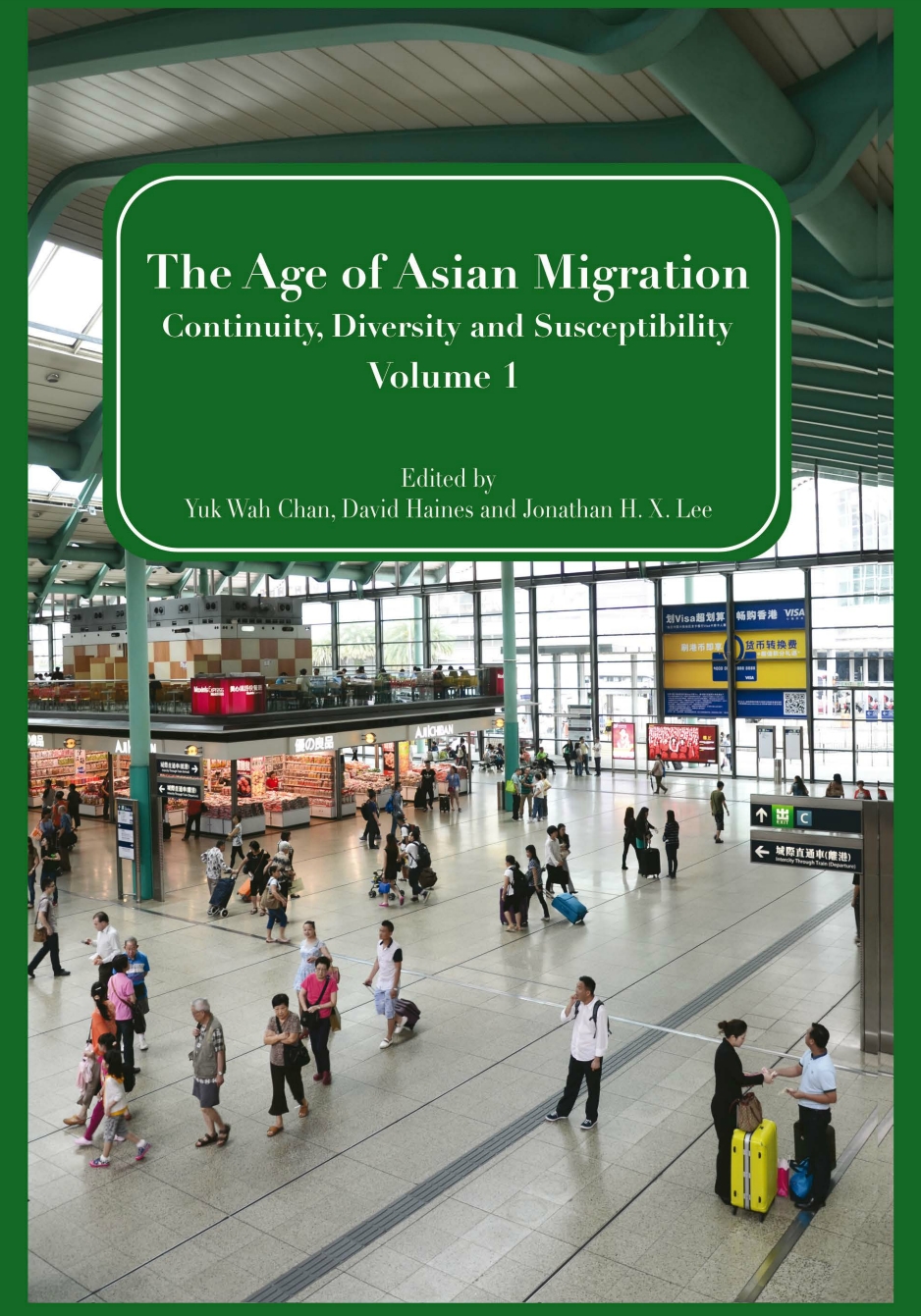
  • co-edited with Yuk Wah Chan and David Haines. Age of Asian Migration: Continuity, Diversity, and Susceptibility, Volume 1. Newcastle: Cambridge Scholars Publishing.
  • "Singing Our Lives with His Words: R.J. Sin, Cambodian American Musician Strumming History, Pain, and Subjectivity. In Yuk Wah Chan, David Haines, and Jonathan H.X. Lee, eds., Age of Asian Migration: Continuity, Diversity, and Susceptibility, Volume 1. Newcastle: Cambridge Scholars Publishing. 256-267.
  • "Introduction: Cambodian, Lao, and Hmong Diaspora in the United States." In Yuk Wah Chan, David Haines, and Jonathan H.X. Lee, eds., Age of Asian Migration: Continuity, Diversity, and Susceptibility, Volume 1. Newcastle: Cambridge Scholars Publishing. 244-255.
  • Guest editor, American Academy of Religion, Spotlight on Teaching, Teaching Asian American Religions and Religiosities. May 2014.
  • "Teaching Asian American Religions and Religiosities: Guest Editor's Introduction"
  • co-edited with Kathleen M. Nadeau. Asian American Identities and Practices: Folkloric Expressions in Everyday Life. Lanham: Lexington Books, Rowman & Littlefield, 2014.
  • with Kathleen M. Nadeau. "Introduction: Disciplines and Discourses in Asian American Folklore and Folklife: Prospects, Patterns, Practices, and Problems in an Emerging Landscape." In Asian American Identities and Practices: Folkloric Expressions in Everyday Life, edited by Jonathan H. X. Lee and Kathleen M. Nadeau. Lanham: Lexington Books, Rowman & Littlefield, 2014.ix-xxi.
  • with Vivian-Lee Nyitray. "Things Matter: Chinese American Culture Work and the Gods of Marysville. In Asian American Identities and Practices: Folkloric Expressions in Everyday Life, edited by Jonathan H. X. Lee and Kathleen M. Nadeau. Lanham: Lexington Books, Rowman & Littlefield, 2014. 69-81.
  • with Mark Sabas Leo. "Igorot American Folk Dance: Performance, Identity, and the Paradox of Decolonization." In Asian American Identities and Practices: Folkloric Expressions in Everyday Life, edited by Jonathan H. X. Lee and Kathleen M. Nadeau. Lanham: Lexington Books, Rowman & Littlefield, 2014. 147-166.
  • "Guangong: The Chinese God of War and Literature in America: From Celestial Stranger to Common Culture (1850-2011 CE)." In Asian American Identities and Practices: Folkloric Expressions in Everyday Life, edited by Jonathan H. X. Lee and Kathleen M. Nadeau. Lanham: Lexington Books, Rowman & Littlefield, 2014. 167-184.

2013

  • with Kathleen M. Nadeau. “Asian American Folklore: Disciplinary Fissions and Fusions.” Asian American Folklore: Passages and Practices. Spec. issue of Amerasia Journal 39.2 (2013): ix-xxii.
  • “The Global and Civil Dimensions of Tzu Chi Compassion Society’s Peace Work in America.” Living in Peace: Insights from Buddhism. Ed. Chanju Mun and Ronald S. Green. Honolulu: Blue Pine. 143-157.
  • with Mary Thi Pham. “Pedagogy for Healing and Justice through Cambodian American Literature.” Worldly Teaching: Critical Pedagogy and Global Literature. Ed. Masood Ashraf Raja and Hillary Stringer. New York: Palgrave MacMillan. 97-112.
  • Taiwanese and Taiwanese Americans, 1940-Present.” Immigrants in American History: Arrival, Adaptation, and Integration. Ed. Elliott Robert Barkan. Santa Barbara, CA: ABC-CLIO, 2013. 1331-1340.
  • “Tzu Chi Compassion Society’s Peace Work in America.” Journal of International Association of Buddhist Universities 3.1.

2012

2011

Authored the following entries:

  • “Asian Buddhist American: The Jataka Tales,” vol. 3, 1221-1223.
  • “Bok Kai Temple and Parade,” vol. 1, 231-233.
  • “Cambodian Americans: Dying and Death Rituals,” vol. 1, 191-193.
  • “Cambodian Americans: Kaundinya and Soma,” vol. 3, 1223.
  • Cambodian Americans: Religion,” vol. 1, 209-213.
  • “Cambodian Americans: Urban Legends,” vol. 1, 217-219.
  • “Chinese Americans: Arts and Crafts,” vol. 1, 230-231.
  • “Chinese Americans: Children's Folk Songs,” vol. 1, 233-234.
  • “Chinese Americans: Heros and Heroines,” vol. 1, 282-283.
  • “Chinese Americans: Proverbs and Maxims,” vol. 1, 304-305.
  • “Guandi,” vol. 1, 278-281.
  • “Hawaii Sugar Plantation,” co-authored with Noriko Sanefuji, vol. 2, 601-602.
  • “Hmong Americans: Clothes and Jewelry,” vol. 2, 424-425.
  • “Hmong Americans: Family and Community,” vol. 2, 427-428.
  • “Hindu Temples in America,” co-authored with Geetha A. Mandayam and Patit Paban Mishra, vol. 2, 479-482.
  • “Introduction: Asian American Folklore and Folklife,” co-authored with Kathleen Nadeau, vol. 1, xxxv-xl.
  • “Jain Temples,” vol. 2, 487-488.
  • “Laotian Americans: Arts, Crafts, and Home Decoration,” vol. 2, 719-720.
  • “Laotian Americans: Domestic Religious Practices,” vol. 2, 723-724.
  • “Laotian Americans: Family and Community,” co-authored with Nasy Inthisone Pfanner, vol. 2, 727-729.
  • “Laotian Americans: Festivals and Holidays,” vol. 2, 729-730.
  • “Laotian Americans: Folk Dance and Performance,” vol. 2, 730-732.
  • “Laotian Americans: Foods and Foodways,” co-authored with Nasy Inthisone Pfanner, vol. 2, 732-734.
  • “Laotian Americans: History, People, and Culture,” vol. 2, 713-717.
  • “Laotian Americans: Narrative Folklore,” vol. 2, 744-745.
  • “Laotian Americans: Proverbs and Maxims,” vol. 2, 746-747.
  • “Laotian Americans: Religion,” vol. 2, 747-752.
  • “Laotian Americans: Social Etiquette and Customs,” vol. 2, 754-755.
  • “Laotian Americans: Traditional Medicine and Healing,” vol. 2, 755-756.
  • “Laotian Americans: Vernacular Language, Speech, and Manner,” vol. 2, 757-758.
  • “Lotus Flower,” vol. 1, 68-69.
  • “Paper Sons/Paper Daughters,” vol. 1, 303-304.
  • “Punjabi Americans: Arts, Crafts, and Home Decorations,” co-authored with K. N. Sethi, vol. 3, 1005-1006.
  • “Punjabi Americans: Dying and Death Rituals,” co-authored with Patit Paban Mishra, vol. 3, 1008-1010.
  • “Punjabi Americans: Family and Community,” co-authored with Patit Paban Mishra, vol. 3, 1010-1012.
  • “Punjabi Americans: Foods and Foodways,” co-authored with Patit Paban Mishra, vol. 3, 1014-1015.
  • “Punjabi Americans: Home Decoration,” co-authored with Patit Paban Mishra, vol. 3, 1020-1021.
  • “Punjabi Americans: Names and Name Giving,” co-authored with Patit Paban Mishra, vol. 3, 1024-1026.
  • “Punjabi Americans: Proverbs and Maxims,” co-authored with Patit Paban Mishra, vol. 3, 1026-1028.
  • “Punjabi Americans: Rites of Passage,” co-authored with Patit Paban Mishra, vol. 3, 1030-1033.
  • “Root Quest,” vol. 1, 76-77.
  • “Taiwanese American Religious Temples,” Vol. 1, 313-316.
  • “Thai Americans: Traditional Medicine and Healing,” vol. 3, 1122.
  • “Tianhou/Mazu,” vol. 1, 319-321.
  • “Vietnamese Americans: Religion,” vol. 3, 1204-1206.
     
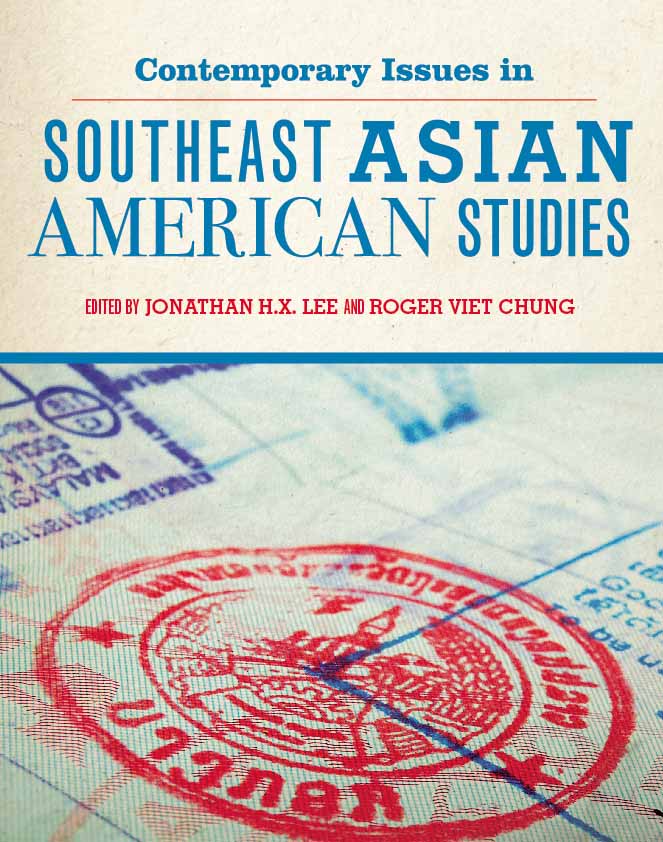
  • with Roger Viet Chung. “Introduction: Who Are Southeast Asian Americans?” Contemporary Issues in Southeast Asian American Studies. Ed. Jonathan H. X. Lee and Roger Viet Chung. San Diego, CA: Cognella Academic Publishing. 1-4.
  • Maintaining Patterns: Community Ritual and Pilgrimage in a Diasporic Taiwanese American Religious Community.” Asia Pacific: Perspectives 10.1 (Apr. 2011): 82-102.
  • with Mark Leo. "Performing Thai and Indigenous Igorot American Folklore and Identities: Ethnic and Cultural Politics Revealed." Positioning Southeast Asia in the Globalized World. Comp. Mohammad Raduan Mohd Ariff, Hanafi Hussin, Rodney C. Jubilado, Lowell S. Bautista, and Christine Yun May Yong. Proc. of the 4th International Conference on Southeast Asia. Kuala Lumpur, Malaysia: Department of Southeast Asian Studies, U of Malaya, 2011. 383-396.

2010

  • “Bring Strangers Together: Chinese/Chinese American Engaged Buddhism, Race and Inter-Ethnic Relations in America.” Global Recovery: The Buddhist Perspective. Chomthong, Bangkok, Thailand: Mahachulalongkornrajavidyalaya University. 460-474.
  • “Cambodian American Ethics of Identity Formation.” Cambodian American Experiences: Histories, Communities, Cultures, and Identities. Ed. Jonathan H. X. Lee. Dubuque, IA: Kendall and Hunt Publishing Company. 343-353.
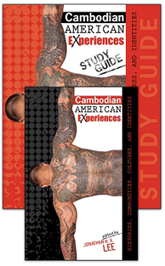
  • Cambodian American Experiences: Histories, Communities, Cultures, and Identities. Dubuque, IA: Kendall and Hunt Publishing Company.
  • Cambodian American Experiences: Histories, Communities, Cultures, and Identities – Study Guide. Dubuque, IA: Kendall and Hunt Publishing Company.
  • “Cambodian Americans and Religion.” Asian American History and Culture: An Encyclopedia. Ed. Huping Ling and Allan W. Austin. Armonk: M.E. Sharpe Inc., East River Books. 114-116.
  • “Cambodian/Cambodian American Religions.” Cambodian American Experiences: Histories, Communities, Cultures, and Identities. Ed. Jonathan H. X. Lee. Dubuque, IA: Kendall and Hunt Publishing Company. 418-432.
  • “Chinese Americans and Religion.” Asian American History and Culture: An Encyclopedia. Ed. Huping Ling and Allan W. Austin. Armonk: M.E. Sharpe Inc., East River Books. 223-226.
  • “Daoist Temples in California.” Asian American History and Culture: An Encyclopedia. Ed. Huping Ling and Allan W. Austin. Armonk: M.E. Sharpe Inc., East River Books. 169-170.
  • with James Ciment, “Hmong Americans and Religion.” Asian American History and Culture: An Encyclopedia. Ed. Huping Ling and Allan W. Austin. Armonk: M.E. Sharpe Inc., East River Books. 511-513.
  • “Introduction.” in Cambodian American Experiences: Histories, Communities, Cultures, and Identities. Ed. Jonathan H. X. Lee. Dubuque, IA: Kendall and Hunt Publishing Company.
  • “Laotian Americans and Religion.” Asian American History and Culture: An Encyclopedia. Ed. Huping Ling and Allan W. Austin. Armonk: M.E. Sharpe Inc., East River Books. 513-514.
  • “An Outline of Cambodian History.” Cambodian American Experiences: Histories, Communities, Cultures, and Identities. Ed. Jonathan H. X. Lee. Dubuque, IA: Kendall and Hunt Publishing Company. 2-16.
  • “Vietnamese Americans and Religion.” Asian American History and Culture: An Encyclopedia. Ed. Huping Ling and Allan W. Austin. Armonk: M.E. Sharpe Inc., East River Books. 589-590.

2009

2006

2005

2004

  • Auburn’s Joss House: Preserving the Past for the Future (The Auburn Chinese Ling Ying Association House). Auburn: Auburn Joss House Museum and Chinese History Center.
  • Hanford’s Taoist Temple and Museum (#12 China Alley): Preserving a Chinese American Treasure. Forward by Vivian-Lee Nyitray. Hanford: Hanford Taoist Temple Preservation Society.
  • “The Introduction of the Mazu Faith and Its Dissemination during the Qing Dynasty.” Trans. from Taiwan Mazu miao yuelan [A Survey of Mazu Temples in Taiwan], by Wang Chien-ch’uan and Li Shih-wei (Taipei: Boyang Wenhua Shiye Youxian Gongsi, 2000) 26-42. Taiwan Literature: English Translation Series, University of California, Santa Barbara’s Forum for the Study of World Literatures in Chinese 14 (Jan. 2004). 129-140.
  • The Temple of Kwan Tai: Celebrating Community and Diversity, Mendocino, CA. Mendocino: Temple of Kwan Tai Inc.

2003

Creative Work

2008
Happy Birthday Mazu—Empress of Heaven, Goddess of the Sea. East Meets West Education Film Production. Documentary film.

Service

Current Community and Professional Involvement

Chinese America: History and Perspectives, Editorial Board (2009-present)
Santisuksa: Journal of Peace Studies, Editorial Board (2014-present)
Southeast Asians in the Diaspora, Brill, Editorial Board  (2014-present)
Journal of Southeast Asian American Education and Advancement (JSAAEA), Editorial Board (2011-present)
Association for Asian American Studies, Annual Meeting Program Committee (2014-2015)
American Academy of Religion, Western Region, North California Representative (2013-present)
American Academy of Religion, Western Region, Diversity Advocate (2011-2013)
American Academy of Religion, Western Region, Faculty co-chair, Religions of Asia (2010-2013)
American Academy of Religion, Western Region, Faculty co-chair, Asian American Religious Studies (2013-present)
Peralta Hacienda Historical Park, National Endowment of the Humanists adviser and consultant for “Rhythm of the Refugee, a Cambodian Journey of Healing”
Planning and Steering Committee Member, The National Asian Pacific Islander American Historic Preservation Forum (2009-present)
South East Asian Cultural Heritage and Musical Performing Arts (SEACHAMPA), Board of Directors (2012 -- present)
Chinese Historical Society of America, Board of Directors (2011-2013)
Center for Lao Studies, Board of Directors (2010-2012)

Current Campus Service

Alpha Phi Omega, Mu Zeta Chapter), Faculty Advisor
South East Asian Student Association, Faculty Advisor
University Library Advisory Committee
University Faculty Hearing Panel
AAS Major/Minor Advisor
AAS Department BA Curriculum Planning Committee
AAS Department Scholarship Committee

About M Hajiaboli

M Hajiaboli

()

Lecturer
College of Science and Engineering

Phone Number:
(415) 338-7739
Location:
SCI 112

At SF State Since:

2014

Office Hours:

Blake Riggs Headshot

Blake Riggs

( He/Him/His )

Professor; Associate Department Chair
Biology, College of Science and Engineering

Phone Number:
(415) 338-1499
Location:
HH 724

At SF State Since:

2010

Office Hours:

Bio:

Blake Riggs is an associate professor and Associate Chair in the Department of Biology at San Francisco State University (SFSU).  Dr. Riggs grew up in South Los Angeles and attended UC Santa Cruz (UCSC) as an undergraduate. He was a Minority Access to Research Careers (MARC) scholar and received a Bachelors degree in Marine Biology, but was fascinated with the idea of cell division.  He received both his Master’s degree and PhD in Molecular, Cell and Developmental Biology at UCSC on research involving role of intracellular membrane transport on cell division.  Dr. Riggs was postdoctoral fellow from 2006 – 2009 at UC Berkeley and joined the faculty at San Francisco State University in 2010.  Dr. Riggs received an NSF-CAREER award in 2015 to examine how cells generate diversity during development. Currently, Dr. Riggs’ laboratory studies the molecular pathway involved in organelle inheritance during cell division and how cells adopt a fate during development.

Website:

https://riggs8.wixsite.com/riggslab 

Research Description

Project I

Entry into mitosis sees a dramatic change in cellular organization ultimately leading up to division.  Most prominent among these changes are the condensation and alignment of the chromosomes and the reorganization of the cytoskeleton, including the microtubule-based mitotic spindle.  Less understood are the rearrangements of the intracellular organelles, the Golgi apparatus (GA) and the Endoplasmic Reticulum (ER).  It is essential for cellular life that these organelles be distributed in the newly divided daughter cells.  In additon, it is unclear if mitotic reorganization of these organelles play any role in key events during mitosis.

A current project in my laboratory is investigating the mechanism and regulation of mitotic ER reorganization during cell division.  It is unclear what factors are involved in reorganization of the ER and if these dramatic changes are cell cycle regulated?  We will examine mitotic ER reorganization in the rapid divisions of early embryo of the fruitfly, Drosophila melanogaster.  Investigations in the early Drosophila embryo offers several advantages including dividing in syncytium for the first 13 divisions, which include a rapid synchronous mitosis occurring on the average every ~15 minutes.  We will employ both genetic analysis and live fluorescence confocal microscopy, to examine the requirements of intracellular membrane reorganization during mitosis.

Project II 

Cancer comprises many diseases that are essentially an overproliferation of cells, forming solid tumors detrimental to the host.  Anti-mitotic therapies target rapidly proliferating cell growth by disrupting specific events during mitosis and initiating cell death pathways.  Most successful of the anti-mitotic agents are the vinca alkoids and taxanes which are effective against a wide variety of cancers but display a high level of neurotoxicity.  There has been an effort to develop other mitotic targets as potential anti-mitotic agents, including the microtubule motor Eg5, and the mitotic kinase Aurora B.  Currently, small molecule inhibitors of these targets are in clinical studies and have shown lesser degree of toxicity but their efficacy against solid tumor growth appears no better than the vinca alkoids and taxanes. One explanation is the discovery that some anti-mitotic agents can allow the cell to exit mitosis prematurely into G1 tetraploid state, where a percentage of these cells continue to divide producing highly aneuploid progeny. This mitotic slippage into the next G1 cycle, has been shown to be due to the gradual degradation of the regulatory protein Cyclin B which is the active component of the mitotic kinase Cdk. My laboratory is interested in the identification of factors using double stranded RNA (RNAi) inhibition that will effectively reduce slippage, and increase the rate of apoptosis in Drosophila S2 cells.  These factors will also be examined in transformed human breast epithelial MCF10A cells.

Publications

  • Riggs, B., and R. Heald (2011) Altering membrane topology does not impair spindle assembly in Xenopus egg extracts.  Submitted.
  • Loughlin, R., B. Riggs, R. Heald. (2008) Snapshot: motor proteins in spindle assembly. Cell 134(3): 548
  • Cao, J., R. Albertson, B. Riggs, CM. Field, and W. Sullivan. (2008)  Nuf, a Rab11 effector, maintains cytokinetic furrow integrity by promoting local actin polymerization. Journal of Cell Biology 182(2):301-13.
  • Riggs, B., B. Fasulo, S. Mische, A. Royou, T. Hays, and W. Sullivan (2007) The role of Microtubles, Dynein, and the Recycling Endosome in furrow formation in the early Drosophila embryo. Mol Biol Cell 9:3313-22
  • Albertson, R., B. Riggs, and W. Sullivan. (2005) Membrane traffic: a driving force in cytokinesis. Trends Cell Biol 15: 92-101.
  • Riggs, B., W. Rothwell, S. Mische, G.R.X. Hickson, G.W. Gould, T. Hays, and W. Sullivan. (2003) Actin cytoskeleton remodeling during early Drosophila furrow formation requires recycling endosomal components Nuclear-fallout and Rab11. Journal of Cell Biology, 163: 143-154.
Headshot of Leticia Hernandez-Linares

Leticia Hernandez

( She/Her/Hers )

Assistant Professor
Latina/Latino Studies  

Phone Number:
(415) 405-0395
Location:
EP 416

At SF State Since:

2016

Office Hours:

Bio:

Leticia Hernández-Linares is a bilingual, interdisciplinary, award winning, writer, artist, and racial justice educator. The first-generation U.S. born daughter of Salvadoran immigrants, she is the author of Mucha Muchacha, Too Much Girl and Alejandria Fights Back!  ¡La lucha de Alejandria!  a project of Rise-Home Stories, a collaborative of multimedia storytellers and housing, land, and social justice advocates. 

Widely published, her writing has appeared in literary anthologies, journals, and newspapers, some of which include Maestrapeace: San Francisco’s Monumental Feminist Mural, Latino Poetry: The Library of America Anthology, Bomb Magazine, Huizache and The San Francisco ChronicleShe has created numerous interdisciplinary performances and art installation projects and has presented her poemsongs throughout the country and in El Salvador.  Her university teaching includes courses in Gender Studies, Creative Writing, Ethnic Studies, Oral History, Central American Studies, Latinx Literature, and English Composition.  Hernández-Linares is particulary focused on Central American Diaspora Studies and Mesoamerican History and Culture.  

Throughout her career, she has convened and collaborated  with other Salvadoran and Central American artists and writers.  While working in journalism, she contributed to the Izote Vos book project, and authored the Central American section of an Ethnic Studies textbook.  In 2001, she was part of Foro 2000, an artivist delegation to El Salvador; and in 2003, she performed in Epicentrico: Rico Epicentro (A Night of Central American Performance) at Highways (L.A). Her poetic, interactive installation, Papeleo, was featured in the group exhibition, Mourning and Scars (2013, S.F.).  She performed at the Encuentro Poético: Salvadoran-American Poets at the Smithsonian in D.C., in 2014, and Variedades sponsored by Stanford and Grand Performances in L.A., in 2019.  She has worked on numerous projects in Washington D.C.: she taught an online bilingual poetry class at the Oyster Adams Bilingual school; served as poet in residence with Sol & Soul; together with Split this Rock, organized the Wandering Song book launch at Busboys and Poets; and, she was guest of honor at Hechizo, Arte y Poesía at La Casa de la Cultura Salvadoreña.  Her bilingual poetry appears in  Theatre Under My Skin: Contemporary Salvadoran Poetry published by Kalina Press and in Poeta Soy: Poesía de mujeres salvadoreñas, a book published by the Salvadoran Ministry of Education and Biblioteca Escolar Presidencial, 2019. Her work was also included in the first convening of Central American Women Writers in El Salvador in 2019 at the Otro Modo de Ser conference. In 2024, she hosted a two-day program, Places We Call Home,  both on campus and in the community. These three events, funded by the Library of America and the San Francisco Public Library, featured Salvadoran and Central American female poets, two of the poets joining from San Salvador and Santa Barbara. 

For over thirty years, she has worked in the arts, public K-12 schools, universities, and community-based organizations, nationwide. She has worked in various capacities in arts education, community engagement and leadership, and school reform, and has extensive experience in SFUSD.  Advocacy, sharing best practices, and community building has taken her across the country and beyond. She spoke for two consecutive years at the National Service-Learning Conference, and in 2007, she presented before all the Central American ministers of culture on the topic of arts education and violence prevention in El Salvador.  She has delivered keynotes and presented on panels throughout the United States and in El Salvador. She has presented to student and community groups on diverse topics such as Gentrification, Youth Development, Global Majority Feminisms and Ethnic Studies and Salvadoran Culture & History.

A two-time San Francisco Library Laurate, she received the Community Appreciation Teyolía Award from the SF International Flor y Canto Literary Festival in 2023. Since 2024,  she has served as the English language MC for the historic Carnaval San Francisco Parade in the Mission. She is a five-time San Francisco Arts Commission grant awardee, and she has lived, created, and protested in the Mission District of San Francisco for three decades.  
CV:

Christopher S Weinberger Headshot

Christopher S Weinberger

()

Professor
Comparative & World Literature, College of Liberal and Creative Arts

Email:
Phone Number:
(415) 338-7403
Location:
HUM 455

At SF State Since:

Office Hours:

Biography

Ph.D. University of California Berkeley, 2009

Director, Dilena Takeyama Center for the Study of Japan and Japanse Culture

Research/Interests

  • Ethics
  • History of Criticism
  • Metafiction
  • Literary theories in 19th, 20th and 21st century
  • Japanese, U.S., and British Literary Traditions
About Tao He

Tao He

()

Associate Professor
Mathematics, College of Science and Engineering

Phone Number:
(415) 338-1368
Location:

At SF State Since:

2015

Office Hours:

Bio:

Education

Ph.D., Statistics, Michigan State University, 2015

Dual Ph.D., Quantitative Biology, Michigan State University, 2015

M.S., Applied Mathematics, Xi'an Jiaotong University, 2010

B.S., Applied Mathematics, Xi'an Jiaotong University, 2007


Research Interests

  • High dimensional statistical inference, non- and semi-parametric models, statistical learning.
  • Large scale genome-wide association study, pathway association, statistical genetics, QTL mapping of complex traits/diseases, gene-environment interaction.
  • Next generation sequencing data analysis and Microarray data analysis.


Teaching

  • MATH 324, Probability and Statistics with Computing, San Francisco State University
  • MATH 447, Design and Analysis of Experiments, San Francisco State University
  • MATH 448, Introduction to Statistical Learning and Data Mining, San Francisco State University
  • MATH 748, Theory and Applications of Statistical and Machine Learning, San Francisco State University
  • STT 200, Statistical Methods, Michigan State University
Luella Fu Headshot

Luella Fu

()

Associate Professor
Mathematics, College of Science and Engineering

Phone Number:
(415) 338-1026
Location:
TH 947

At SF State Since:

2018

Office Hours:

Bio:

Students in any of my classes (Math324, Math440, Math441, Math761): please email me at sfsustatshelp[at]gmail[you know the rest] to be sure I get your email!