

About Robyn J Crook

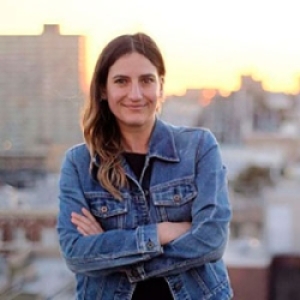
Robyn Crook

()

Associate Professor
Biology, College of Science and Engineering

Phone Number:
(415) 338-1278
Location:

At SF State Since:

2015

Office Hours:

Bio:

I am an evolutionary biologist and behavioral neuroscientist. My lab studies the evolution and function of higher cognitive states, primarily pain. Our main animal models are cephalopods, and techniques in my lab include electrophysiology, genomics, and behavioral assays. 

We focus on plasticity in primary nociceptive neurons, looking at how this plasticity is mediated at the molecular level, and in turn, how this cellular plasticity mediates changes in neural circuits, behaviors and ultimately, the fitness of individual animals coping with injury or other painful experiences.

I have a long standing interest in the ethical basis of research animal regulation, and in the philosophical views of scientists and members of the public relating to the use of various animal species in scientific research. Through our lab's work on the evolution and functions of pain, we seek to advance the fields of sensory neurobiology, animal behavior and physiology, and in parallel inform the debate over appropriate levels of protection for invertebrate animals used in research.


Website(s):

Students interested in working in my lab should first visit the lab's webpage, and email me at rcrook@sfsu.edu for further information on space. Currently the lab is full and I have a wait list for both spring and summer of 2016, but places should be available in the Fall.


I accept undergraduates and Masters students only (no PhD students). Information about the different Biology Masters programs can be found here; students completing the Marine Biology or Physiology Master's programs may conduct research in my lab. Applications open in October and close in February for the following Fall semester. 


Undergraduate students may apply to conduct research in my lab by registering for Biol 699, by prior arrangment with me. Course credit is for one semester, but undergraduates should expect to spend at least two semesters in the lab (first semester as a volunteer). I give priority to Physiology majors in good academic standing, who have at least two semesters before graduation. Undergraduate students who do not fit this description may be admitted if there is space available. 


Typically undergraduate students are responsible for animal care, tank maintenance and general lab tasks. In their first semester they are paired with an experienced undergraduate or Masters student, and new students assist and contribute to established research projects. By the end of the first semester in the lab, each undergraduate can expect to take responsibility for their own experiment; this is typically one component of a larger research story.


Masters students are expected to contribute to animal care, tank maintenance and general lab tasks throughout their tenure in the lab. By the end of their first semester I expect Masters students to be ready to begin their independent research project. Masters projects should be original, relevant to the lab's research program, and be of sufficient scope to result in one or more primary research publications. Masters students are responsible for the conception, design and analysis of their project, and for the submission of a thesis describing their findings. Projects may be behavioral or neurophysiological, or a combination of both. 

Yang, Q., Wu. Z., Hadden, J.K, Odem, M.A., Zuo, Y., Crook, R.J. Frost, J.A. and Walters, E.T. (2014) Persistent pain after spinal cord injury is maintained by primary afferent activity. J Neurosci. 34(32) 10765-10769


Crook, R.J. and Walters, E.T. (2014) Neuroethology: Self recognition helps octopuses avoid entanglement. Curr. Biol. 24(11) 520-521


Crook, R.J., Dickson, K.D., Hanlon, R.T and Walters, E.T. (2014). Nociceptive sensitization reduces predation risk. Curr. Biol. 24(10) , 1121-1125 


Alupay, J.S., Hadjisolomou, S.P and Crook, R.J. (2013). Arm injury produces long-term behavioral and neural hypersensitivity in octopus. Neurosci. Lett. 558, 137-142 


Crook, R.J., Hanlon, R.T. and Walters, E.T. (2013). Squid have nociceptors that display long term sensitization and spontaneous activity after bodily injury. J. Neurosci. 33(24) 10021-10026 (featured in ‘Outside JEB’, ‘BrainFacts.org’)


Wu. Z., Yang, Q., Crook, R.J., O'Neil, R.G. and Walters, E.T. (2013). TRPV1 channels make major contributions to behavioral hypersensitivity and spontaneous activity in nociceptors after spinal cord injury. Pain, 154(10) 2130-2141


Crook, R.J. (2013). The welfare of invertebrates in research: Can science’s next generation improve their lot? (Invited review) J. Postdoct. Aff. 1(2), 9-20


Matthias, N., Robinson, M.A., Crook, R.J., Lockworth, C.R. and Goodwin, B.S. (2013). Local cryoanalgesia is effective for tail-tip biopsy in mice. JAALAS, 52(2) 171-175


Crook, R.J., and Basil, J.A. (2013). Flexible spatial orientation and navigational strategies in Chambered Nautilus. Ethology, 119(1), 77-85


Wardill, T., Gonzalez-Bellido, P., Crook, R.J. and Hanlon, R.T. (2012) Neural control of tunable skin iridescence in squid. Proc R. Soc. B, 279(1745) 4243-4252


Basil, J.A., Barord, G., Crook, R.J., Derman, R., Ju, C.H., Travis, L. and Vargas, T. (2012) A synthetic approach to the study of learning and memory in Chambered Nautilus (Cephalopoda: Nautiloidea). Vie Et Milieaux, 61(4) 231-242


Bedi, SS, Lago, M., Crook, R.J., Grill, R and Walters, E.T. (2012) Spinal cord injury triggers an intrinsic growth-promoting state in nociceptors. J. Neurotrauma 29(5) 925-935


Crook, R.J., Lewis, T., Hanlon, R.T and Walters, E.T.  (2011). Peripheral injury produces long-term sensitization of responses to tactile and visual stimuli in squid, Loligo pealei. J. Exp. Biol. 214, 3173-3185


Crook, R.J. and Walters, E.T. (2011). Nociceptive behavior and physiology in molluscs: Animal welfare implications. ILAR 52 (2) 185-195


Bedi, S.*, Yang, Q.*, Crook, R.J.*, Du, J, Wu, Z., Fishman, H., Grill, R., Carlton, S., and Walters, E.T. (2010). Chronic spontaneous activity generated in the somata of small dorsal root ganglion neurons is associated with pain-related behavior following spinal cord injury. (*equal contribution) J. Neurosci. 30(44) 14870-14882


Crook, R.J., Hanlon, R.T and Basil, J.A. (2009). Memory of visual and topographical features suggests spatial learning in the ancient cephalopod, nautilus (Nautilus pompilius L.). J. Comp. Psych. 3 264-274


Crook, R.J., and Basil, J. (2008). A role for nautilus in studies of the evolution of brain and behavior (Invited review). Comm. Int. Bio. 1: 61-62


Crook, R.J. and Basil, J.A. (2008). A biphasic memory curve in the Chambered Nautilus, Nautilus pompilius L. (Cephalopoda: Nautiloidea) J. Exp. Biol. 211: 1992-1998 (Article featured in Nature Research Highlights, ScienceDaily, ScienceBlogs)


Crook, R.J., Patullo, B.W., and Macmillan, D.L. (2004). Multimodal individual recognition in the freshwater crayfish Cherax destructor. Mar. Fresh. Behav. Physiol. Vol 37, No. 4: 271-285

Spring 2016

Biol 865 

Environmental Physiology


Graduate-level seminar course examining current research into Environmental Physiology, broadly defined. In the Spring I will teach this class with an emphasis on the physiology of severe environmental stress. For each topic, we will consider the effect of that stressor on organismal physiology, and the physiological compensations and adaptations to that stressor.


Undergraduates may be admitted to the class if space is available. Interested students should email me at rcrook@sfsu.edu to request consideration.


Topics will include: 

  • Marine and terrestrial physiology of global warming
  • Physiological responses to oceanic and terrestrial pollution
  • Physiology of injury
  • Physiology of social stress
  • Physiology of emerging infectious diseases facilitated by environmental change
  • Other topics chosen by students


The Class Syllabus and Schedule will be posted here prior to the start of the Spring semester.


Fall 2015 

Biol 613G

Human Physiology Laboratory


This laboratory course investigates the physiology of normal human bodies. Topics include the renal system, pulmonary function, exercise physiology, cardiovascular physiology and muscle physiology. Students learn standard techniques for measuring normal physiological states and homeostatic physiological mechanisms. Groups of students work independently in the last month of the course, to complete experiments of their own design. 

This is a GWAR (writing intensive) class. Lab reports make up a large percentage of the final grade, and each week an in-class tutorial session is provided to support development of scientific writing skills.


Course Syllabus download

Class Schedule download

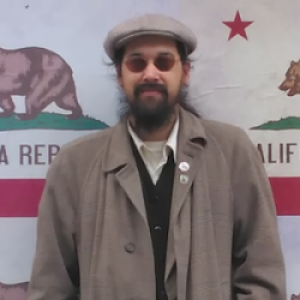
Michael Allan Loebs Headshot

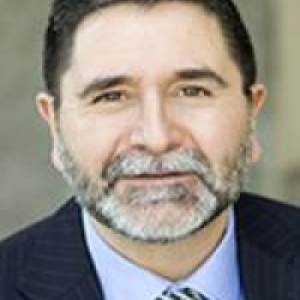
Michael Allan Loebs

()

Lecturer Faculty
Department of Political Science

Phone Number:
(415) 338-2247
Location:
HUM 302

At SF State Since:

Office Hours:

Bio:

Michael Loebs received an M.A. in Political Science at San Francisco State University following undergraduate studies at UC Berkeley and City College of San Francisco. Loebs' classes primarily focus on the development, tensions, and contradictions of "Western" political thought from ancient Greece to the present, training students to look with a challenging and critical eye at concepts from across the ideological spectrum.

Specific fields of interest include the relation between political theory and practice; democratic and anti-democratic thought; morality in politics, especially the role of political violence; gender and queer theory; the mutual interplay of conservative, liberal, and socialist ideology; and possible avenues of reforming California politics. As part of pursuing these interests, Loebs has taught in the Political Science department at SF State since 2013 and has also served as chairperson of the California National Party since 2019.

About Chun Kit Lai

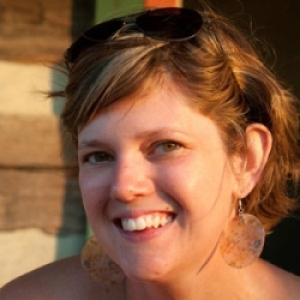
Chun Kit Lai

()

Associate Professor
Mathematics, College of Science and Engineering

Phone Number:
(415) 338-1627
Location:

At SF State Since:

2014

Office Hours:

Website(s):


Bio:

Click Here for detailed webpage.​


Research Interests

Fourier analysis and harmonic analysis.
Fractal geometry.
Tiling theory.
Frame theory.

More specifically, I study the existence and structure of the exponential orthonormal bases, Fourier frames, Riesz basis, windowed exponentials on fractal measures. Because of its relation with applied harmonic analysis, I am also interested in classical sampling theory and Gabor analysis. And vice versa, I am also interested in applying harmonic analysis techniques to studying fractal geometry. 


Publications in refereed journals

You may find my papers on Arxiv.

1. On Fourier frame of absolutely continuous measures, J. Funct. Anal., 261 (2011), 2877-2889.
2. (with K.S. Lau and X.G. He), Exponential spectra in L2(\mu), Appl. Comp. Harm. Anal., 34 (2013), 327-338. 
3. (with K.S. Lau and H. Rao), Spectral structure of digit sets of self-similar tiles on R^1, Tran. Amer. Math. Soc, 365 (2013), 3831-3850.
4. (with X.G. He and X.R. Dai), Spectral property of Cantor measures with consecutive digits, Adv in Math, 242 (2013), 187-208.
5. (with D. Dutkay) Some reduction of the spectral set conjecture to integers, Math. Cambridge. Proc. Soc., 156 (2014), 123-135. 
6. (with D. Dutkay) Uniformity of measures with Fourier frames, Adv in Math., 252 (2014), 684-707. 
7. (with J.-P Gabardo) Frames of multi-windowed exponentials on subsets of R^d,  Appl. Comp. Harm. Anal., 36 (2014),  461-472.

8. (with J.-P Gabardo) Spectral measures associated with the factorization of the Lebesgue measure on a set via convolution, J. Fourier. Anal. Appl., 20 (2014), 453-475.

9. (with J.-P Gabardo and Y. Wang),  Gabor orthonormal bases generated by the unit cubes, J. Funct. Anal., 269 (2015), 1515-1538.

10. (with Y. Wang),  Non-spectral fractal measures with Fourier frames, To appear in J. Fractal Geometry.

11. (with D. Dutkay),  Spectral measures generated by arbitrary and random convolution, To appear in J. Math Pure. Appl. .

12. (with K.S. Lau and H. Rao),  Classification of tile digit sets as product-forms, To appear in Tran. Amer. Math. Soc.

13. (with D. Dutkay)  Self-affine spectral measures  and frame spectral measures on  R^d, submitted.

 14. (with D. Dutkay and J. Hausserman)  Hadamard triples generate self-affine spectral measures, submitted.

 .

Publications in Conference Proceedings

1.  (with X.-R. Dai, X.-G. He)  Law of pure types and some exotic spectra of fractal spectral measures, Proceeding in Mathematics and Statistics 88, pp 47–64, Geometry and Analysis of Fractals, D.-J. Feng and K. S. Lau (eds.), Springer, 2014.

.

Teaching

Graduate Course taught at San Francisco State University:

Fall 2016: MATH 710 Graduate Analysis

Spring 2016:  MATH 890: Frame theory and Compressed sensing. Lectures are provided. Comments welcome 

Lecture 1   Lecture 2   Lecture 3   Lecture 4   Lecture 5  Lecture 6

Lecture 7   Lecture 8   Lecture 9   Lecture 10   Lecture 11 Lecture 12


Undergraduate Courses taught at San Francisco State University

MATH 226: Calculus (I) 

MATH 227: Calculus(II) 

MATH 228: Calculus (III)

MATH 325: Linear algebra

MATH 380: Complex Variable

MiniCourse in The Chinese University of Hong Kong (2013): Fractal Sets and their Analysis.

Previous teaching in McMaster University: Calculus for business (I) and (II), Engineering Calculus (II), Probability and Linear Algebra.  

Previous Teaching in The Chinese University of Hong Kong: Teaching assistant of Stochastic Processes, Introductory Probability, Fourier Analysis, Real Analysis. 


Useful Links(for research)

Department of Mathematics and Statistics, McMaster University
Department of Mathematics, The Chinese University of Hong Kong
Arxiv search
mathscinet
 

CV:

CV_Lai.pdf103.91 KB
Amy Casselman Hontalas Headshot

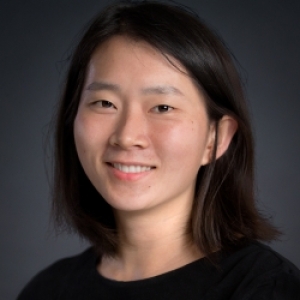
Amy Casselman Hontalas

()

Lecturer
American Indian Studies, College of Ethnic Studies

Phone Number:
Location:
EP 407

At SF State Since:

2012

Office Hours:

Bio:

Amy Casselman is an adjunct professor at San Francisco State University where she teaches in the American Indian Studies, Race and Resistance Studies, Ethnic Studies, and previously the Women and Gender Studies departments. 

She holds a Master’s degree in Ethnic Studies from San Francisco State University and a Bachelor’s degree in American Studies from the University of California, Santa Cruz. Prior to her career in academia, Amy was a Case Worker for the Washoe Tribe of Nevada and California where she provided support services for Native children and families.

She is the author of Injustice in Indian Country: Jurisdiction, American Law, and Sexual Violence Against Native Women.

Education:

  • M.A. Sociology Stanford University
  • M.A. Ethnic Studies San Francisco State University
  • B.A. American Studies University of California Santa Cruz

Courses Taught:

  • ETHS/RRS 110 Critical Thinking and the Ethnic Studies Experience
  • AIS 150 American Indian History in the United States
  • AIS 205 American Indians and U.S. Laws
  • AIS 420 Native Genders and Feminism (formerly titled "American Indian Women")
  • AIS 460 Power and Politics in American Indian History

Research interests:

  • Race
  • Gender
  • Law and Policy
  • Colonization and Indigeneity
  • Activism and Social Movements

Publications:

Hontalas, Amy L. Casselman. “Taking the Children to Take the Land: Indian Child Welfare and the Enduring Epidemic of Family Separation - Past, Present, and Future.” In Policing or Providing?: The Child Welfare System as Poverty Governance. Eds. Kerry Woodward and Jennifer Randle. New York University Press. (Forthcoming Spring 2024)

Casselman, Amy L. 2016. Injustice in Indian Country: Jurisdiction, American Law, and Sexual Violence Against Native Women. New York: Peter Lang.

Casselman, Amy L. 2016. “Oliphant v. Suquamish, 1978” 50 Events that Shaped American Indian History: An Encyclopedia of the American Mosaic. Eds. Donna Martinez and Jennifer W. Bordeaux. Santa Barbara: ABC-Clio.

Professional Website:

https://www.amyhontalas.com/

About Nikolas Sean-Paul Nackley

Nikolas Sean Paul Nackley

()

Lecturer
Music and Dance, College of Liberal and Creative Arts

Phone Number:
Location:

At SF State Since:

2014

Office Hours:

Bio:

Acclaimed baritone and music educator, Nikolas Nackley is a lecturer in voice and opera at the San Francisco State University School of Music. 

Nikolas has served as a full time and visiting lecturer at universities around the San Francisco Bay Area and Massachusets and is sought after as a master vocal and choral clinician and competition adjudicator.  In addition to his academic work at SF State, he is currently the Director of Vocal Studies at UC Berkeley.   At San Francisco State,  he conducts the University Chorus, teaches lyric diction and phonetics, opera workshop, vocal pedagogy, vocal practicum, and applied vocal instruction.   In the last few years he lead SF State’s Chamber Singers and University Chorus in the school’s first performance the “St. Matthew Passion” by Heinrich Schütz as well as Michael Haydn’s “Missa Tempore Quadragesimae”, Stravinsky’s “Mass”, Charpentier’s “Messe Pour Minuit de Noël”, Haydn’s “Part Songs”, and the Brahms “Zigeunerlieder" as well as Duruflé's "Requiem", Pinkham's "Christmas Cantata", and Schubert's "Mass in G Major" among others.  As a stage and music director of opera, he has directed, musically prepared and or conducted the university’s opera program in productions including Menotti's "Old Maid and the Thief" and "Amelia al ballo",  Mozart’s “La Finta Giardiniera”, Strauss’ “Fledermaus”, Handel’s “Alcina”, Cavalli’s “La Calisto” and “To Hell and Back in 400 Years”, a composite Orpheus pastiche-opera that he arranged and directed.

From 2016-2018 Professor Nackley conducted the UC Berkeley University Chorus in performances including Britten’s “Gloriana Choral Dances”, Purcell’s “Come, Ye Sons of Art”,  Charpentier’s “Messe de Morts”, De Lalande’s “De Profundis Clamavit”, the Berlioz “Apotheose" from the "Symphonie Funebre et Triomphale”,  Fauré’s “Requiem”, the Vivaldi “Gloria”, Pärt’s “Two Slavic Psalms” and Bernstein’s “Chichester Psalms” in collaboration with ensembles including the UC Berkeley Symphony Orchestra, Contra Costa Wind Symphony, and the Jubilate Orchestra. In addition, he led a joint concert of songs of protest, resistance, and praise from around the world performed with the University Gospel Chorus.

As a solo vocal artist, Nikolas is in demand for his work on both the concert and operatic stage in California, the East Coast, and abroad.  He has been heralded by the San Francisco Chronicle as “sonorous and heroic” and praised by the Boston Globe for his ability to “continually impress with his beautiful voice and acting.”  Recently featured in the title role of West Edge Opera’s critically acclaimed “Il ritorno d’Ulisse in patria”, his other recent credits include the role of Captain Bouchardon in the West Coast premier of Matt Mark's opera, “Mata Hari”,  Joe Pitt in the West Coast premier of Peter Eötvös’s “Angels in America” with the Los Angeles Philharmonic, Adonis in Blow’s “Venus and Adonis” with Marin Baroque, Mozart "Requiem", Brahms "Requiem", Bach’s St. John Passion, Cantata BWV 140 and Handel’s “Ode for the Birth of Queen Anne” with the SF Bach Choir,  Figaro in Paisiello’s “Barber of Seville” with WEO’s Opera Medium Rare, Bach’s “Christmas Oratorio”, "B Minor Mass" and Haydn's "The Seasons" with Marin Oratorio, the West Coast premier of Kaija Saariaho’s “The Tempest Songbook” with Cal Performances and a recital series in the Northumberland region of England.

He has worked as a featured soloist under such conductors as Gustavo Dudamel, Sir Roger Norrington, Joana Carneiro, Bruno Weil, Craig Smith, Harry Christophers, John Harbison, and Pablo Heras Casado.

Other recent engagements include the world premier of Stacy Garrop’s “Terra Nostra” with the SF Choral Society, Bach’s “St John Passion”, “Carmina Burana”  and Mozart’s “Requiem”with the Bay Choral Guild, the role of Pallante in Handel’s “Agrippina” and the Badger/Parson in Janacek’s “The Cunning Little Vixen”  with West Edge Opera,  the West Coast premiere of Jocelyn Hagen’s “Ashes of Roses” with Symphony Silicone Valley,  Haydn’s “Paulkenmesse” and the Duruflé “Requiem” with the Southern Oregon Repertory Singers.

Christopher Koenig Headshot

Christopher Koenig

()

Professor
Communication Studies, College of Liberal and Creative Arts

Phone Number:
(415) 338-3174
Location:
HUM 434

At SF State Since:

2016

Office Hours:

Bio:

I am a communication scientist with training at the intersection of linguistics, sociology, and communication studies. My research seeks to understand communication about health and illness through investigating language as a discursive social process. Overall, my work shows how communication can encourage culturally sensitive care, to facilitate holistic well-being, and to foster thoughtful reflection about the roles of health and illness in society.

For my latest work, please see the link to Research Gate where I keep my scholarly and research activity updated.

Paloma Mathern Headshot

Paloma Mathern

()

Lecturer Faculty
Communication Studies, College of Liberal and Creative Arts

Phone Number:
(415) 338-7310
Location:
HUM 567

At SF State Since:

Office Hours:

Please consult your course syllabus or contact the instructor directly for office hours.

Colin Johnson Headshot

Colin Johnson

()

Professor
Hospitality & Tourism Mgmt, College of Business

Email:
Phone Number:
(415) 338-6084
Location:
BUS 349

At SF State Since:

Office Hours:

Sunday: Closed
Monday: Closed
Tuesday: Closed
Wednesday: 11:15-12:00, 13:00-15:00
Thursday: 10:30-11:00
Friday: Closed
Saturday: Closed

Bio:

Colin Johnson, Ph.D., holds a doctorate in economic and social sciences from Fribourg University, Switzerland. He also has an M.B.A. from Manchester Business School and a B.A. from the Open University in the UK.

He has worked in many sectors of the hospitality industry including contract catering, airline catering, two, four and five star hotels, private members clubs, retail restaurants and was assistant catering manager at Manchester United Football Club.

He has held faculty and management positions in seven colleges and Universities in the UK, Switzerland and the US. He was the dean at the Domino Carlton Tivoli Hotel Management School in Lucerne, Switzerland and dean and then founding director of research at the Lausanne Institute for Hospitality Research at the ecole hoteliere de Lausanne.

Previous to joining San Francisco State University, he served as professor and chair at San Jose State University. He has published in a number of leading hospitality and tourism journals including The Annals of Tourism Research, The Cornell Hotel and Restaurant Quarterly, and The International Journal of Hospitality Management and Managing Service Quality. He is on three editorial boards.

His research interests include services internationalization, small and medium size enterprises and social entrepreneurship.

Education: 

  • B.A.. in History, Open University (United Kingdom)
  • M.B.A. in Business Administration, Manchester Business School (United Kingdom)
  • Ph.D. in Economic and Social Sciences, Fribourg University (Switzerland)


Intellectual Contributions

  1. Chen, J., Johnson, C., Wang, W., & Chen, Y. L. (accepted). Stakeholders’ perspective of sustainability in Arctic region: a qualitative study.” Tourism Analysis, 19(2), TBD. cognizantcommunication.com
  2. Scaglione, M., & Johnson, C. (published). Tourism productivity convergence in Europe: Leaders and catchers up (p. pps.13–pps25.). Productivity in Tourism. Keller, P. Bieger, T (Eds), ESV.
  3. Johnson, C., & Vanetti, M. (published). “Internationalization and the Hotel Industry”: Vol. 1 (M. Woodhouse A.G., Ed.; 1st ed., pp. 285–301). International Society of Culture, Tourism and Hospitality Research.
  4. Tuzun, I. K., Ergul, M., & Johnson, C. (published). Tourism’s contribution to the United Nation’s Sustainable Development Goals: examples from the literature.
  5. Ergul, M., Korkusuz, P., Tuzun, I. K., & Johnson, C. (2023). Achieving Sustainabl Tourism Growth Through Wine Tourism An Exploratory Study investigating Ankara as Potential Epicenter. Eurochrie 2023.
  6. Brida, J. G., Scaglione, M., Johnson, C., & Graña, V. M. (2023). TRAVELLERS BEHAVIOUR AND PERCEPTION OF RISK DURING THE COVID-19 PANDEMIC; A COMPARATIVE CASE STUDY OF SWITZERLAND AND URUGUAY (D. Gursoy, Ed.). 10th Advances in Hospitality & Tourism Marketing and Management (AHTMM). http://www.ahtmm.com/
  7. Ergul, M., Korkusuz, P., Johnson, C., & Tuzun, I. (accepted). Achieving Sustainable Tourism Growth through Wine Tourism: An Exploratory Study Investigating Ankara as Potential Epicenter.
  8. Brida, J. G., M. S., Johnson, C., & Graña, V. M. (2022, November 1). The impact of Covid-19 on the desire to travel for the summer vacations: a north-south cross comparison case study of Switzerland & Uruguay. Conference Proceedings. Accepted.
  9. Scaglione, M., Larpin, B., & Johnson, C. (2021). AirBnB's Guests' rating of hosts professional qualities. Advances in Hospitality and Leisure, 17, pps 55–pps 83. https://www.emerald.com/insight/publication/issn/1745-3542
  10. Scaglione, M., Johnson, C., & Yasuo, O. (2021). Tourism management in Japan and Switzerland: Is Japan leapfrogging traditional DMO's? A research agenda. In C. K. Wolfgang Wörndl & J. Stienmetz (Eds.), Enter confernce proceedings-the International Federation for IT and Travel & Tourism (IFITT), (Not known att his stage (virtual conference), Vol. Not known att his stage (virtual conference), p. Not known att his stage (virtual conference)). Springer. https://enter-conference.org/program/
  11. Legrand, W., Gardetti, M. A., Nielsen, R. S., Johnson, C., & Ergul, M. (2020). Social Entrepreneurship in Hospitality Principles and Strategies for Change (R. S. N. Willy Legrand Miguel Angel Gardetti, Ed.; p. 264 Pages 44 B/W Illustrations). Published November 15, 2020 by Routledge. https://www.routledge.com/Social-Entrepreneurship-in-Hospitality-Principles-and-Strategies-for-Change/Legrand-Gardetti-Nielsen-Johnson-Ergul/p/book/9781138734111#.X7KNvfrFOAw.linkedin
  12. Giusepponi, K., & Johnson, C. (2020, November 14). INNOVATIVE STARTUPS IN BIOPHILIC TOURISM: THE CASE OF “BOTEL DIFFUSO DEI LAGHI”: VALUES, BUSINESS MODEL AND CHAL-LENGES. Management International Conference (MIC), Ljubljana, Slovenia. Accepted. www.mic.fm-kp.si
  13. Eser, H., İpekTüzün, İ. K., Ergul, M., & Johnson, C. (2020, October 20). Big Data, Social Media and Employer Branding: An exploratory study from the lodging industry. EuroCHRIE. Accepted. https://www.eurochrie2020.org
  14. Tüzün, i. K., Ergul, M., & Johnson, C. (2020). Sustainable Tourism Practices in the Mediterranean (J. Tuzan Ergul, Ed.; p. 183). Routledge. www.routledge.com
  15. Scaglione, M., Johnson, C., & Larpin, B. (2019, December 11). Are private hosts important for Airbnb’s guests?. Consumer Behaviour in Tourism Symposium. Published.
  16. Miriam, S., Johnson, C., & Pascal, F. (2019). As time goes by: Last minute momentum booking and the planned vacation process.". Journal of Information Technology and Tourism, TBD(TBD), TBD. https://www.springer.com/business+%26+management/business+information+systems/journal/40558
  17. Tuzun, I., Ergul, M., Tanaka, K., & Johnson, C. (2018). The Influence of Cultural Orientation on Employee Job Performance: Cases from Turkish and Japanese Hotel Employees.. Published.
  18. Campanari, A., Cavicchi, A., & Johnson, C. (2018). From the Rise of Authentic Italian restaurants in America to the Creation of New Multicultural Food Tourism experiences. EuroCHRIE. EuroCHRIE
  19. Tuzun, I. K., Ergul, M., Tanaka, K., & Johnson, C. (2018). The Influence of Cultural Orientation on Employee Job Performance: Cases from Turkish and Japanese Hotel Employees. EuroCHRIE. EuroCHRIE
  20. Johnson, C., Simeon, R., Scaglione, M., & Ergul, M. (2018). An exploratory study of the role of e- learning in hospitality and tourism & social entrepreneurship in developing economies.. EuroCHRIE. EuroCHRIE
  21. Johnson, C., Ergul, M., Scaglione, M., & Simeon, R. (2017). E learning and the potential for addressing the talent gap in Hospitality and tourism: a study of three countries. EuroCHRIE. Eurochrie
  22. Johnson, C. (2017). “The Good Company, Sustainability in Hospitality, Tourism and Wine” . Columns Girling, A, Gordy, H., Lanier, P., Business Expert press.",. TBD(TBD), 2. Wine Economics and Policy. https://www.journals.elsevier.com/wine-economics-and-policy
  23. Scaglione, M., Johnson, C., & Pascale, F. (2017, January). Key factors in the booking activity process: the case of self-catering in Romand-Valais destinations, Switzerland. Published. http://www.ifitt.org/experience-enter/
  24. Ergul, M., Emine, A., & Johnson, C. (2016, October). Ageing Consumers and the Perception of Healthy Eating: The Role of the Foodservice Industry in Seniors’ Well-Being. Published. http://eurochriebudapest2016.org/wp-content/uploads/2016/01/Proceedings-of-EuroCHRIE-2016-Conference.pdf
  25. Folendorf, A., Ergul, M., Akysoydan, E., Johnson, C., Arslantas, A., Quliyer, Z., Ergul, E., & Quliyer, D. (2016, October). Healing and Balancing Life Through the Therapeutic Use of Turkish Rose Oil and Water. Published. http://eurochriebudapest2016.org/wp-content/uploads/2016/01/Proceedings-of-EuroCHRIE-2016-Conference.pdf
  26. Folendorf, A., Johnson, C., & Ergul, M. (2014, October 1). Gastronomic Tourism in San Francisco Bay Area.. Published.
  27. Scaglione, M., Trabichet, J. P., & Johnson, C. (2013). The Swiss Tourism Sector and Web 2.0 Change Management”: Vol. 4 (B. Keller P., Ed.; pp. 101–114). Managing Change in Tourism. Creating opportunities and overcoming obstacles. ESV.
  28. Johnson, C., Ergul, M., & Miriam, S. (2012). Investigating Transcational Philantrophy in The Hospitality Industry An Exploratory Study Studying Hotels. European Journal of Tourism, Hospitality and Recreation. Published.
  29. Ergul, M., Johnson, C., & Kleinrichert, D. (2012). Social Entrpreneurship: A Hospitality and Tourism Perspective. European Journal of Tourism, Hospitality and Recreation. Published.
  30. Joseph, C., Thouraya, G. L., & Johnson, C. (accepted). Cross cultural examination of decision elements: Youth tourism in Switzerland. Anatolia: An International Journal of Hospitality and Tourism Research. 0-www.tandfonline.com.opac.sfsu.edu/toc/rana20/current
  31. Kleinrichert, D., Ergul, M., Johnson, C., & Udaci, M. (2012). Boutique Hotels: Technology, Social Media & Green Practices. Journal of Hospitality and Tourism Technology, 3(3), 211–225. www.emeraldinsight.com/products/journals/journals.htm?id=jhtt
  32. Ergul, M., Johnson, C., Cetinkaya, A. S., & Robertson, J. B. (2012). An Exploratory Study Linking Turkish Regional Food with Cultural Destinations. Academica Turistica. Published.
  33. Ergul, M., & Johnson, C. (2011). Social Entrepreneurship in the Hospitality and Tourism Industry:An Exploratory Approach. The Consortium Journal of Hospitality and Tourism, 16(2).
  34. Kleinrichert, D., Johnson, C., Ergul, M., & Uydaci, M. (2011). Comparing Green Boutique Hotel Practices: San Francisco Bay Area and Istanbul (R. Verma, Ed.). Center for Hospitality Research.
  35. Scaglione, M., & Johnson, C. (accepted). “The Swiss Tourism Sector and Web 2.0 Change Management”: Vol. 3 (1st ed., p. in press). Management of Change in Tourism, creating opportunities-overcoming obstacles, Keller, P., Bieger, T (Eds).
  36. Gherissi-Labben, T., Chen, J. S., & Johnson, C. (2008). Youth tourists' lodging and dining preferences. Tourism Analysis, 2008.
  37. Johnson, C., & Vanetti, M. (2007). Internationalization and the Hotel Industry. CAB International, pps.285–pps.301.
  38. Johnson, C., Gherrissi Labben, T., & Chen, J. S. (2006). Youth Patron’s Trip preferences and perceptions of Accommodations in Switzerland. Advances in Hospitality and Leisure, 2, pps. 199–pps. 211.
  39. Johnson, C., Surlemot, B., Pascal, N., & Revaz, F. (2005). Behind the Stars: A Concise typology of Michelin Restaurants in Europe. The Cornell Hotel and Restaurant Quarterly/Sage Publications, 46(2), pps 170–pps 187.
  40. Johnson, C., & Vanetti, M. (2005). Internationalization and the hotel industry in Eastern Central Europe. Advances in Hospitality and Leisure/Elsevier Publications, 1(1), pps.153–pps.175.
  41. Johnson, C., & Vanetti, M. (2005). Las estrategias de localización de las cadenas hoteleras internacionales. Annals of Tourism Research En Espanol/Elsevier, 7(2), pps. 351–pps. 376.
  42. Johnson, C., & Venetti, M. (2005). Locational strategies of International hotel chains in Eastern Central Europe. Annals of Tourism Research., 32(4), pps. 1077–pps. 1099.
  43. Johnson, C. (2004). Ecotourism planning considerations in Central and Eastern Europe (Diamantis D. & S. Geldenhuys, Eds.). Continuum books Ltd.
Tara Lockhart Headshot

Tara Lockhart

( She/Her/Hers )

Professor
Department of English Language and Literature

Phone Number:
(415) 338-1711
Location:
HUM 543

At SF State Since:

2008

Office Hours:

Bio:

I've taught Composition Studies here at SF State for the last 12 years and have taught college writing for 20 (!). I'm excited to share the interdisciplinary nature of this field with you; to hear your experiences about learning and writing; and to build an engaged community around social justice-oriented learning. I teach undergraduate writing courses, as well as graduate courses in composition, literacy studies, and pedagogy. 

My scholarship focuses on writing/learning transfer, hybrid forms of the essay which promote writers’ rhetorical and stylistic awareness, pedagogies for graduate-level writing instruction, and open-access publishing. As a researcher, I am most proud of my work co-founding and serving as Senior Editor of the journal Literacy in Composition Studies. I have co-authored/co-edited two books: Informed Choices: A Guide for Teachers of College Writing and Literacy and Pedagogy in an Age of Misinformation and Disinformation. My work has also appeared in College English, Enculturation, and several edited collections.

Please consult your course syllabus or contact the instructor directly for office hours.

cv 2023.docx30.02 KB
Sameer Verma Headshot

Sameer Verma

()

Professor
Information Systems, College of Business

Phone Number:
(415) 338-7016
Location:
BUS 205C

At SF State Since:

1999

Office Hours:

Bio:

Sameer Verma, Ph.D. is professor of Information Systems in the Lam Family College of Business at San Francisco State University. He has served as Department Chair of the information Systems department from 2021-22 to 2023-24.


His research focuses on the diffusion and adoption of innovative technologies. He is currently working on several academic research projects which include the diffusion and adoption of open technologies, air-gapped infrastructure in rural and remote environments, and the impact of private Retrieval-Augmented Generation (RAG) in the context of Generative AI. In addition to his academic work, Professor Verma has worked with companies in consulting capacity in the areas of technology strategy, policy and governance.


Professor Verma has served on the Board of Directors of the Drupal Association. He currently serves on the Board of Directors of WiRED International. He also serves on the advisory boards of The Center for Ethical and Sustainable Business (CESB) at SF State, and some San Francisco Bay Area technology companies. He is also the founder of the Commons Initiative at SF State, the One Laptop per Child San Francisco community, the One Laptop per Child Jamaica community and an institutional partner at the Center of Excellence, University of the West Indies, Jamaica.


He still plays with Lego every chance he gets. He has much to learn from his two children.


CV:

  • Ph.D. in Business Administration, Georgia State University, Atlanta, GA, USA, August, 2000.
  • Bachelor of Engineering, Civil Engineering, Osmania University, Hyderabad, India, July 1992.

San Francisco State University, San Francisco CA (2021-22 to 2023-24)

  • Department Chair, Information Systems, Lam Family College of Business.

San Francisco State University, San Francisco CA (1999-2000 to present)

  • Professor of Information Systems
  • Research and teaching - Computer networks, next generation Internet technologies and event-driven infrastructures for Content Delivery Networks (CDN).
  • Research and development of service-oriented (QoS and ToS) networks. Implementation via campus-based wireless LANs
  • Research on the development and deployment of corporate and academic online learning initiatives as instances of e-commerce.
  • Study of Quality of Service and Latency Effects via small scale robots controlled over intranets.
  • Study of networking concepts such as time-to-live (TTL) and hypertext transfer protocol (HTTP) and their implications on closed networks. This research is being implemented using by gnutella and its variants.
  • Evolution of node-to-node networks and its impact on online transactions.

Sphere Interactive, Inc., Atlanta GA ('99)

  • Manager of Technology Services: Managed projects for design, development and deployment of online learning for mid-to-large sized corporations.

Spec International, L.L.C., Atlanta GA ('98)

  • Manager, Internet R&D: Development of the website. Design and Development of Internet-aware systems.

May & Speh Strategic Decision Services, Atlanta GA ('97)
 

  • Credit Risk Modeling: Creating generic credit bureau models for the credit industry for assessing good and bad risk customers.
  • Custom Models for Finance/Credit Industry: Create custom models for particular customers by modeling company data and industry data and create a composite model.

Interactive Products and Services, AT&T, Atlanta GA ('95)

  • Development of Intranet based emerging technologies: Develop Intranet material for AT&T in Atlanta. This material included HTML, graphics and some multimedia material.
  • Training personnel in using emerging technologies: Train AT&T personnel in emerging software technologies for developing Intranets and maintaining databases of reports and documents between remote offices.

Decision Sciences, Georgia State University, Atlanta GA('93 - '96)
 

  • Research and Development in Intelligent Tutoring Systems: Developed a working prototype for a US Army funded project. This tutorial/prototype demonstrated the techniques of computer assisted instruction and computer based training complete with testing reporting and monitoring.
  • Hypermedia-based Non-linear Knowledge Based Systems: Developed a database of hypermedia resources for Westinghouse Savannah River Company (project funded through Georgia Research Alliance). This collection of hypermedia resources was designed to replace their existing paper-based engineering standards and procedures.
  • Web-based Decision Support Systems: Developed and presented a framework for providing decision support through the web. This framework goes beyond the simple expansion of the network from a LAN to a WAN. It also incorporates the role of intelligent agents that collect important information which helps in supporting the decision making process.
  • Web-based distributed learning: Extending the computer based learning from the classroom to the world. A prototype was developed that delivered course material, class lectures and tests on any platform using custom Java applets.
  • webmaster@dsc.gsu.edu: I was Webmaster at Decision Sciences for over four years (when being webmaster was cool). I worked closely with the faculty and students to develop the entire site on ADDIE-M guidelines. This server caters to the information needs of the department and supports over 150 mime types. It also supports the ftp site and a prototype push server.
  • The Commons Initiative at SF State. http://commons.sfsu.edu/
  • All things OLPC - One Laptop per Child. I run projects in India, Jamaica and help with others in Madagascar, Armenia, Tuva, San Francisco, etc. I am also the founder and chief organizer of OLPC San Francisco volunteer community. Track us down at http://olpcsf.org/
  • Captive Portals in Wireless Networks: Examining the role of captive portals in wireless networks. See the report here
  • Networked Robotics: communicating with LEGO® MindstormTM robots over IP networks to study QoS issues.
  • The O.R.E.O. Project : O.R.E.O. stands for Openscript Remote Execute Object. O.R.E.O. adds Internet services such as HTTP, FTP, SMTP, SNMP etc. to native Toolbook applications in Microsoft Windows. No browsers needed.
  • The Toolbook Portal : A collection of resources for Toolbook programming, development and use.
  • Implementing Opensource Streaming Audio Stations in MP3 and Vorbis : An MP3/Vorbis streaming Audio "radio station" for sending out pre-recorded MP3/Vorbis files in real-time. The current plan is to use this engine to power a "lecture-series" for my classes.

Teaching philosophy

I have attempted to capture the essence of my teaching philosophy in the following sections. Overall, I find that my students enjoy my teaching.


To teach is to learn

I started teaching as a graduate teaching assistant at Georgia State University back in 1995. We were expected to teach the entire session, and not just teach from the professor’s notes. I was gearing up to teach Business Statistics. I was mortified by the feeling that I couldn’t go wrong in front of the class. What I found out instead was that I learned from every one of my students -- even the ones who didn’t participate. Very quickly, I realized that my opinion was one amongst many, and while I was expected to lead, I wasn’t expected to be the all-knowing entity. In fact I found it exciting when students disagreed and expressed their points of view. It gave me a chance to reinforce my outlook. This was the turning point in my career. After teaching that course successfully, I felt that I had found my calling. I wasn’t going to be a pilot or a railroad engineer (my childhood aspirations). I was going to be a teacher.


Beyond the classroom

The term classroom is a bit of a misnomer. The metaphorical room has grown quite a bit. It spans many realms outside of the face-to-face environment. While we have students who have limited work experience, we have others who hold a full time job, and come to get an education in the evening. We also have students who have work experience in other countries, but find it to be at odds with the American work style. Their queries added to the experiences of working students makes for a vivid discussion in the classroom. In one instance, I was explaining the use of media and servers by large Internet companies like YouTube and Netflix. It turned out that one of my students in that class actually managed servers at YouTube! Such richness of experience in the classroom is rare, but we happen to be in the hotbed of tech. We get to experience it first-hand.


Effective use of pedagogy

Given the limitations of time and space, we are compelled to compress a lot of material within a semester. Syllabi, assignments and exams help in creating structure and assessment. I find that in some cases, learning by example via hands-on projects works better. In other instances, such as my MBA classes, the case study approach holds a lot more depth. Effective use of pedagogical methods not only helps in managing the course; it also helps me in making the assessment process a fair and balanced one. I have taught a variety of courses in Information Systems. These range from introductory, to specialized, undergraduate, to graduate, to executive. The breadth and depth of experience is tremendous and can be overwhelming, especially when I have to teach all three kinds of courses in the same semester! I find undergraduate classes to be refreshing because students are open to all kinds of new ideas. I can entice them with hands-on projects where they build servers, networks, and databases. I find graduate courses to be exciting, because the students are mature, and instill a certain depth in the discussions. I can involve them in a case discussion about a company like Facebook or Google from “down on highway 101” and facilitate the questioning of status quo. I find executive MBA courses to be “roll up your sleeves” challenging, because the students are seasoned professionals. It takes a bit of work and time to loosen them up to new ideas, possibilities and growth. My industry experience comes in handy while I am in a EMBA class. In all, I enjoy the whole spectrum. I love being a teacher!


Role of technology

Technology plays a very important support role in teaching. I am usually at a loss without the network in my classroom. Technology plays a powerful support role in my classrooms. Projectors fail, but there's always the blackboard (or whiteboard, as the case may be). Flexibility is key. We are there to teach and learn. The tech supports and makes it even more agile.

The so-called real world

I have always been amused by that term: "real world". It would seem that we in academia live in a make-believe world, where we don’t quite know what goes on in the real world. The gap between what goes on in the classroom and what the students experience when they work outside must be minimized as much as possible. I make every effort to do so by bringing in guest speakers who help reinforce the student views of what to expect in the real world. I also frequently use special study courses to allow students to work with special topics that are not yet covered by our core and elective classes. I serve on the board of advisors and directors of a few companies. I work with industry professionals via our internship program to bring that “real world” into our classrooms, and make students more confident before they step out into the work arena.

Some of my "other" things that may or may not qualify as work-related.